

10/28/09

Bilbo Baggins Believed Shot, but Found via Microchip
Karen Nichols

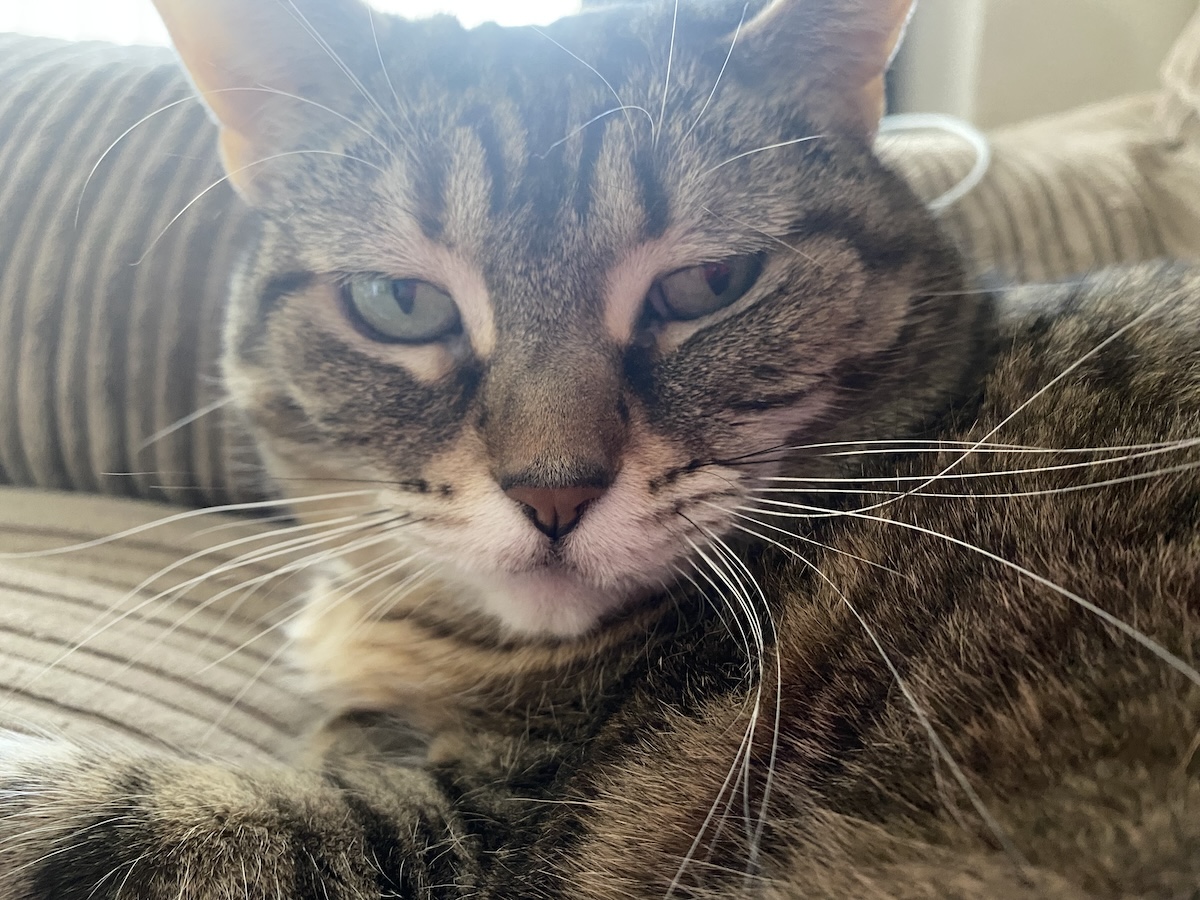
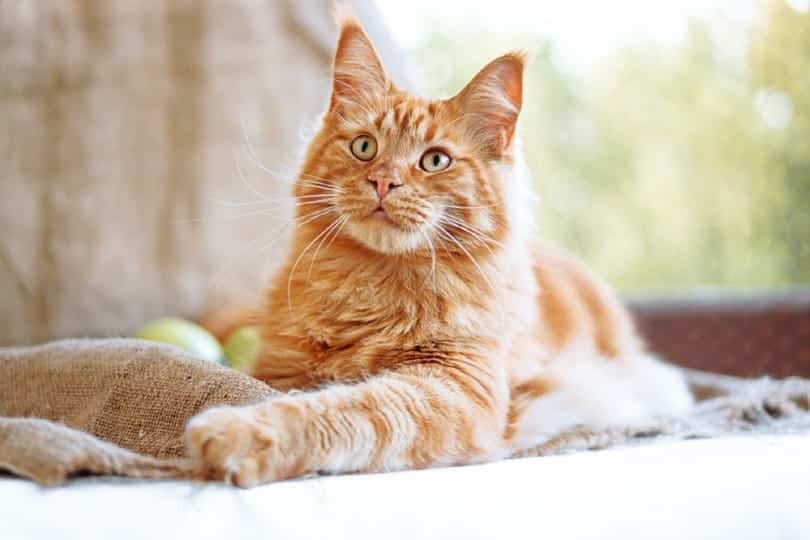
Pete and Caroline Hunt assumed that their 7-yar-old Bengal cat, Bilbo Baggins (pictured above), had been shot by a farmer. Bilbo went missing while the Hunts were attending an archery competition. They had taken their three cats with them in their motor home.

But when they arrived at their RV Park, there were some men shooting at a nearby farm.

Mr Hunt said: “There was a very loud bang from a shotgun very close to us.

“Bilbo isn’t used to noise like that and he ran off. As we had only just arrived at the site, Bilbo didn’t know his way around and must have got lost.

“I asked around all over the place to see if anyone had seen him. When I asked the farmer, he said, well, if he came in here I’d put him down.”

The Hunts were heartbroken to return home with an empty cat box.

Mrs Hunt said: “I thought we’d never see him again. Then someone from these vets in Taunton rang last Thursday and said did we have a Bengal cat.

“I said yes, but we lost him. She replied, we’ve got him here. I was so overjoyed I didn’t know what to say.”

Mrs Hunt had to drive to Taunton to pick up Bilbo. She said: “When I saw him he was very thin. Apparently, he had gone into this woman’s house through the window and she had fed him.

“She took him to her local vets and they read his microchip. Unfortunately, we hadn’t updated our address with the microchipping company but they managed to contact Estcourt House Vets in Devizes and they put them in touch with us.

“Bilbo walked straight up to me, put his little head on my sleeve and purred. I can’t tell you how delighted I was.”

Ed Davies at Estcourt House Vets said: “This shows how valuable it is to get your pet microchipped. But you must tell the microchipping company of any change of address. Fortunately, we had the Hunts’ contact details, which we were able to give the Taunton vets.”

This should serve as a reminder for you to check to see if your microchip contact info is up-to-date.

Microchipping is an essential part of any pet recovery plan, but that plan must also include putting a collar on your pet with ID tags (like TogetherTag) and a bell (to help you locate your cat early on, especially when it’s dark).

Read The Cat’s Meow Guide to Pet Recovery for everything you need to know about keeping your cat safe, and finding her when she’s missing.

[LINK: ThisisWiltshire.co.uk]

See related Cat's Meow entries:
10/19/09

Max the Cat, Lost in Colorado, Reunited with Family in Germany
Karen Nichols

Max the lucky black cat, is heading home to be reunited with his family in Germany, thanks to the kindness of a pair of animal lovers and a microchip.

The 9-year-old cat went missing in Boulder, Colorado in mid-June, when he snuck out of the Boulder Outlook Hotel. His family, the Deraneys of Niedernhausen, Germany, spent the summer at the hotel, and were visiting a family member when he disappeared. Despite an intense search, Max had not been located before the family had to return to Germany.

Max was found October 5th less than a mile from the hotel when a cat-loving couple who saw him roaming the streets brought him to the Humane Society, hoping to adopt him if he didn’t have an owner. A microchip scan showed that Max did have a home … 5,000 miles away.

Max’s survival for four months could “quite possibly be due to the kindness of people in the community,” said Kim Terlau, animal services supervisor at the Humane Society of Boulder Valley.

“He is an active cat and does show interest in prey behavior, but to be honest, I’m not sure how skilled of a hunter he is,” she said. When he was first brought to the shelter, he was famished, scarfing down his food as soon as it was set in front of him.

Marisa Deraney arrived in Boulder after Max completed his international health certificate verifying he was healthy enough to fly. With pet pawsport in hand, Max flew back to Germany with Deraney today.

[LINK: Denver Post]

Max might have been reunited with his family sooner if he’d been wearing ID tags. For more information, read The Cat’s Meow’s Guide to Pet Recovery.

See related Cat's Meow entries:
09/26/09

Sampson the Cat is on His Way Home after 18-month Walkabout
Karen Nichols

sampson

Linda Jansen of Penicuik, Midlothian in Scotland had long given up hope of ever again seeing her cat Sampson (pictured above) who went missing a year and a half ago. Which is why Jansen was stunned to get a call that Sampson had been turned in to a veterinarian in Devon, 500 miles away (see map below). His microchip led the vet to Jansen.

map

Jansen said, “The funny thing is he is a really bad traveller. angus He always gets sick whenever he’s in a car. So forget The Proclaimers – my cat really did walk 500 miles. She added, “I have no idea where he’s been for 18 months but I can’t wait to see him.”

According to the vet, Sampson was well-fed, but appeared to have been living rough.

In the interim, convinced they’d never see Sampson again, Jansen and her daughter adopted Angus, a tabby kitten (right). Sampson will soon have a baby brother to train.

The Edinburgh firm Eagle Couriers has offered to return Sampson to his home in Scotland for free. Director Fiona Deas said: “It’s one of the most amazing pet stories I’ve heard. We’ll make his journey home as comfy as possible.”

Three cheers for Eagle Couriers, who is willing to transport a carsick cat 500 miles!

[LINK: thesun.co.uk]

See related Cat's Meow entries:
08/29/09

Microchip Warning: Are You Registered?
Karen Nichols

lostcatmicrochip3

Imagine this scenario. As a responsible cat owner, you’ve taken care to tag, bell and chip your cat. One day, your cat goes missing. She’s picked up and taken to a shelter and scanned for a microchip. They find the chip and the chip number, but when they search the database for your contact info, it’s a big blank.

Some people don’t know that a microchip must be registered with a database. They either assume that once it’s implanted, you’re done, or they completely forget about taking that important last step.

When your pet is microchipped, you’ll be handed some paperwork and asked to go online to register your pet. Once online, you submit your pet’s info and your contact info. If your pet is lost and her chip is scanned, it is this information that enable those who found your pet to contact you.

I’m sure a few of you are now wondering if you remembered to register the chip, or aren’t sure with which of the six U.S. databases your pet is registered.

Go to ChecktheChip.com and enter your pet’s microchip number. It will tell you the database you need to contact.

If you have lost your pet’s microchip paperwork:

  1. Have your shelter or vet test-scan the microchip. This will give you the microchip number.

  2. Then, enter the number at the microchip search service ChecktheChip.com

  3. The site will tell you with which database the pet is registered. Go to the microchip website and review your pet’s info. If it’s not there, register your microchip number.

  4. Print the results and keep them in your cat’s vet file! You’ll need them if your cat is lost. Also, if your cat turns up at a local shelter, sometimes they want to see that you have the microchip paperwork.

And, don’t forget to update the info every time you move or change telephone numbers. Even if your cat has been missing for years, she can still be found and returned to you if your information is current.

For more information, visit the “Message to Pet Owners” page on ChecktheChip.com.

Thanks to reader Olivia for sharing this info!

If you lose a pet, check out “The Cat’s Meow’s Guide to Pet Recovery.” It contains at least a few strategies that you might not have considered!

Don’t forget! You can leave a comment on this post for an entry in The Cat’s Meow’s giveaway of a custom oil painting of your cat by Linden Alley.

See related Cat's Meow entries:
07/18/09

Allsort the Cat is Back in Amy’s Arms Six Years Later
Karen Nichols

In the UK this week, Amy Turnbull was reunited with her cherished cat, Allsort — after six years.

When Allsort disappeared in 2003, she was devastated, certain she would never see him again.

Despite posting “missing cat’” flyers everywhere and conducting an extensive search, there was no sign of the black cat.

Imagine her amazement this week when she opened a letter from a local vet, telling her that Allsort had found. Not only that, but he’d been living just five streets away.

Amy said, “It was one of the worst days of my life when I realized Allsort had gone. I was absolutely beside myself, it was horrific.

“I had given up all hope of ever finding him, it was terrible. I never thought in a million years I’d have him back.”

Allsort, who was only a year old when he disappeared, was taken in by an elderly couple who thought he was a stray. They made a fuss over him, but later he moved on to different owners. When the new owners they took him to the vet, an ID chip was discovered. Scanning it, the vet discovered that Amy was Allsort’s owner.

She added: “I had seriously thought he was gone forever and that he was dead.”

Although this story has a happy ending and demonstrates the value of microchipping your cat, it also demonstrates the value of keeping an ID tag on your pets. If Allsort had worn a tag, the elderly couple who initially found him would not have assumed he was a stray, and he could have been reunited quickly with Amy, sparing her six years of grief.

[LINK: TheSun.co.uk]

See related Cat's Meow entries:
06/27/09

Dopey Back Home with Family after 6 Years on the Lam
Karen Nichols

Dopey the Cat, a big orange tabby, is back with his family near Sacramento six years after he disappeared. His owner, Donna Lane-Mills, thought he’d been hit by a car, and had long ago given him up for dead.

“He was a favorite of my youngest daughter, who was just 6 years old at the time,” Lane-Mills said. “She was crying herself to sleep at night saying, ‘I miss my Dopey.’ ”

But thanks to a microchip, the cat is back home after living in Rancho Cordova and Yolo County.

Lane-Mills said that the microchip company left a voice-mail message that Dopey had been found in the Yolo County Animal Shelter.

“I was shocked when they told me he was found,” she said.

Where was Dopey all that time? He lived for a while in Rancho Cordova, where he was cared for by a woman who later gave him to her grandmother in Yolo County. When she died, Dopey was surrendered to the shelter.

At the shelter, it’s unlikely that the 9-year-old cat would have been adopted, according to shelter workers.

Dopey has settled right in to the spare bedroom at his original home. He sits in a window and sleeps on the spare bed.

And he’s renewing acquaintances with his old friends: Spencer, a 17-year-old American Staffordshire terrier mix, Inni, a 15-year-old cat, and his standoffish mother, Fluffy, who’s still around.

If Dewey had been wearing a tag when he was lost, he would likely have been reunited with his family six years ago.

Microchipping is only one part of a three-prong pet recovery system, which includes tagging, belling and chipping your cat.

A bell on your cat’s collar can help you locate her when she first escapes, before she truly goes missing.

A tag is the single best defense against losing your pet, enabling an immediate reunion. (Pet recovery solutions like TogetherTag offer web support so that anyone who finds your cat can go online to get you and your vet’s contact info as well as any medical info–a lifesaver if your cat receives daily medication.)

A microchip is an excellent backup to the tag, so that if your cat loses the tag, she can still be reunited with you at any point in the future–even years later. However, chipping alone is not a solution: most people who find lost pets don’t think to take them to a facility where they can be scanned. And if your cat is chipped, always remember to update your contact info with your microchip company when you move.


[LINK/IMAGES: Sacramento Bee]

See related Cat's Meow entries:
06/25/09

Microchip Myths Debunked
Karen Nichols

The best defense against losing your pet is a good offense, which includes tagging and microchipping your cats, putting bells on their collars (when they first escape, it will help you locate them before they become lost) and keeping them secure inside your house.

Not sure whether it’s safe to microchip your pets? HealthyPets.com debunks the most common microchip myths:

It’s always sad to see a flyer stapled to a signpost or on a bulletin board at the grocery store with a picture of a lost pet. You imagine a child waiting for the phone to ring, hoping that some kind person happens to find his kitty and see his flyer. Sadly, once a pet is lost, the odds are against her finding her way home again. According to the American Humane Association, only about seventeen percent of lost dogs and two percent of cats ever find their way back from shelters to their original owners. Almost 9.6 million pets are euthanized every year because their owners can’t be found. There are ways to beat these odds though, and they involve using nametags, collars and microchips. To give your pet the best chance to be identified, no matter how far she roams, have her implanted with a microchip and wear an updated nametag.

Besides providing your contact information, a collar and name tag notifies others that your pet is domesticated and strangers are more likely to assist your pet in finding her home. Since tags can fade, rust, or get scratched and become impossible to read, AAHA suggests inspecting your pet’s tags and collars once a month. If the tags become unreadable or outdated, it is important to immediately replace it with a new nametag with your current contact information.

Although tags and collars are important, they can tear or slip off. With microchipping, on the other hand, a veterinarian injects a tiny computer chip—about the size of a grain of rice—just under your pet’s skin, between the shoulder blades. A number on the microchip is entered into an international database, like the Central Animal Registry or PETtrac. If your dog or cat is found, any animal hospital, shelter, or humane society can use a microchip reader to read the unique ID number contained on the chip. The veterinarian or worker can accesses the database by imputting the number given off by the microchip. The chip can’t be lost or damaged, and it lasts for the pet’s lifetime. However, it is your responsibility as the pet owner to update your contact information.

The microchip is convenient, safe, and reliable. Though many veterinarians and animal shelters are actively working to inform their clients about microchipping, there are still a number of myths keeping pet owners from microchipping their pets.

The myth: The implantation procedure is too expensive.

The truth: While the price can vary from one veterinarian to another, it often falls between $25 and $40. A lot of veterinarians will charge even less if they perform the implantation at the same time as another procedure, like spaying, neutering, or dental work. It’s a one-time fee; the chip never needs maintenance or replacement. There may be a fee, generally under $20, to enter your pet’s ID number in a database, and there may be a small fee for changing your address, phone number, or other contact information in the database. Ask your veterinarian for more information

The myth: It’s going to hurt my pet to get the chip implanted.

The truth: The procedure is simple, routine, and painless, and it doesn’t require any anesthesia. Your pet simply gets an injection just under the loose skin between the shoulder blades; it’s a lot like getting vaccinated. Most animals don’t react at all.

The myth: They couldn’t possibly give every pet with a microchip a unique number. My pet’s number will be duplicated.

The truth: The way technology works today, these tiny microchips can hold huge amounts of information. In fact, the microchips are designed to produce 275 billion different identification numbers. On top of that, manufacturers add unique product and manufacturer’s codes to identify their chips. With all the possible combinations of ID numbers, there are more than enough numbers to make sure every pet has a completely unique number. Click here for a list of microchip manufacturers, the RFID frequency they use and their phone numbers.

The myth: Most shelters and veterinarians don’t have microchip readers, so they won’t be able to identify my pet.

The truth: It’s true that a microchip won’t work to identify your pet unless your pet comes in contact with a microchip reader. There are few shelters and veterinarians in the US today that don’t have readers. (In Canada, almost all the animal control services and veterinarians have readers.) The main microchip manufacturers offer universal microchip readers to humane societies, shelters, and veterinarians for free or for a small fee. Until recently, each brand of microchip could only be read by its own brand of microchip reader. Recently, though, universal readers that read all brands of microchips have been made available to the shelter community. Ask your veterinarian, your nearby humane society or shelter, or the animal control department in your area whether they have microchip readers readily available. If not, encourage them to get the readers. Of course, to be sure your pets will be returned to you, you should identify them with an updated tag and a microchip.

The myth: Eventually, the microchip will wear out and I’ll have to have it replaced.

The truth: The chip doesn’t have an internal battery or power source. Most of the time it is inactive. When the microchip reader is passed over it, it gets enough power from the reader to transmit the pet’s ID number. Since there’s no battery and no moving parts, there’s nothing to wear out or replace. The microchip will last throughout your pet’s lifetime. However, it is your responsibility as the pet owner to update your pet’s microchip everytime you change addresses or phone numbers.

The myth: My cat never goes outside. She doesn’t need to have a microchip ID.

The truth: It’s wonderful that you’re keeping your pet safe inside, but a guest or a repair person could easily leave the door hanging open, or a screen could come loose from an open window. Unaltered pets in particular will take any chance to roam. There’s a possibility that your house could be damaged in heavy storm, flood, or other natural disaster, causing your cat to run away in fear. Pets can even be stolen-particularly birds and exotic or purebred animals. No matter how closely you watch your favorite animal friend, there’s always a chance she could get out, and if she doesn’t have any ID, it will be extremely hard to find her.

The myth: If someone else ever tries to claim my pet, the microchip ID number won’t hold up in court.

The truth: A microchip ID number is unique, it can’t be changed, and it links a pet to its owner through an international database. It works a lot like the serial numbers that link vehicles, stereos, TV sets, and other valuable possessions to their owners. The American and Canadian Kennel Clubs have recognized microchipping as definitive proof of a dog’s identity and ownership, and accept microchip identification to register purebred dogs. If you own a very valuable pet, or if you’re afraid there might be a question about who has custody of your pet, microchip identification could be a big help.

The myth: It’s not safe for my cat to have a foreign object inside his body.

The truth: Any foreign material injected carries some risks. However, the risks of are extremely minimal compared to the risk of your pet becoming lost. Veterinarians have been implanting microchips in animals for years, and the process has been proven to be very safe. The chip is made out of an inert, biocompatible substance, which means it won’t cause an allergic reaction in your furry friend, and it won’t degenerate over time. The first versions of the microchip would sometimes migrate from where they were injected, but manufacturers now design the chips with antimigrating properties. When they’re implanted properly, today’s chips won’t migrate. Once they’re in place, they won’t move around or get near any delicate tissues or organs. You can help make sure the microchip heals securely by keeping your pet calm and quiet for the 24 hours following injection. Because the microchip is placed just under the skin and not internally, microchip reading is completely safe as well.

Microchipping is safe, effective, durable, and dependable, but it can’t absolutely guarantee that a lost pet will be found. The best way to keep your pet safe is to use more than one form of identification. Microchips are long lasting and a wonderful means of identification, but there is a chance a shelter won’t have a reader, so a tattoo would be an effective backup form of identification. If kind strangers find your dog in the street, on the other hand, they won’t have a reader handy to check for a microchip and won’t know where to call to match a animal’s tattoo to an owner. A tag with your name and address would let them bring your pet right back to your door. Another possibility would be a tag that informs readers that your pet has been microchipped and/or tattooed and gives them the number to call to reach the ID number database. There’s always the possibility that one kind of identification could fail, but if your pet has two or three kinds of ID, there’s a good chance that at least one will help bring her home to you. Talk to your veterinarian about how to provide the best identification for your pet.

In a perfect world, leashes, fences, and doors would be enough to keep your pet safe at home. In the real world, accidents happen, and your pet depends on you to protect her against the things that could go wrong. With a little effort now, you can take a big step toward ensuring that your furry friend will be with you in the future.

See related Cat's Meow entries:
06/16/09

Scottish Lass Reunited with Microchipped Moggie
Karen Nichols

Heather and Bo

Heather and Bo

By Cara Sulieman

A LITTLE girl who lost her pet cat on the same day as her doting granddad’s funeral has been re-united with the wayward kitty after a frantic fortnight long search.

Heather Wilson, five, was left distraught when Bo disappeared the same day that Barrie Wilson was laid to rest.

It was a double blow because he was the one who gave her the pet as a birthday present.

But a fortnight later the moggie turned up at the Scottish SPCA centre in Dunfermline in Fife where staff were able to track him back to the Wilson family for a surprise reunion.

“Doubly upsetting”

The eight-month-old kitten was a birthday present for Heather from Barrie, making the double loss even harder.

To shield Heather from the pain, her mum Diane, 30, didn’t tell her about Bo’s disappearance until a few days after it happened.

Diane said: “It was a very bad time for her, doubly upsetting.

“She was very upset and I didn’t tell her straight away because I felt she couldn’t take the news of her granddad and the loss of her cat on the same day. I kept saying Bo had gone out early this morning.

“She’s an only child so we got him as a little buddy for her.

Search party

“She was so excited when she got him – she made a book about him and took it to school where it was read out to her classmates.”

When the schoolgirl was finally told that Bo had run away, she made posters to put up around Rosyth and the whole family went out to search for him.

Kids in the street also rallied round – joining the search party and asking every day if the moggy had returned.

Diane said: “It was quite sweet that they all cared and helped.”

But Bo was found three miles away from home in Dunfermline.

Scottish SPCA

It was a journey that would have taken him across several busy roads and the dangerous A90 dual carriageway.

And once in the town, the clever kitty made his way straight to the right people to help him – the Scottish SPCA wildlife centre.

By luck, an ambulance driver from the charity found the feline sitting on their doorstep.

Mairi Stewart explained that Bo wouldn’t leave her alone.

She said: “Bo just wouldn’t stay away from my van and even jumped in twice.

“People often think cats are strays when they are in fact just roaming near to home, but Bo did seem quite agitated and I thought he’d perhaps been dumped at our centre.”

Microchip

As part of the usual procedure, the centre scanned Bo for a microchip and were able to find out his owner and home address.

Mairi said: “This shows the value of having your pet micro-chipped. It could be the best few pounds a pet owner ever spends.”

But that wasn’t the end of Bo’s journey – he had to be taken to the charity’s Edinburgh centre to stay overnight until Diane could pick him up the next morning.

And rather than telling Heather that her beloved pet was the back, her mum just told her there would be a surprise waiting for her when she got home.

The delighted schoolgirl was overjoyed to see her companion, and said she had missed him waking her up in the mornings.

Hungry kitty

She said: “He doesn’t get to sleep with me on school nights, just at weekends. But he comes in every morning to try and wake me up.”

And Bo has been eating Diane out of house and home since his return, wolfing down three bowels of dried food and some Rice Krispies in the first day.

Diane said: “He’s been so hungry since he got back. I’ve run out of cat food already and he’s only been back for one night!

“But Heather is so excited to have him back – she couldn’t sleep last night.

“I think we’ll keep him in the house for a few weeks until he settles back in, we don’t want him going missing again.”

[LINK: Deadline Scotland]

See related Cat's Meow entries:
06/14/09

Kismet–and a Microchip–Reunites T.K. with Owner
Karen Nichols


Jessica Hamill and “Cindie,” an orange tabby waiting for a furever home at MHS

Tails of Marin: You never know when – or where – your lost pet may turn up
by Jessica Hamill
Posted: 06/12/2009 08:33:46 PM PDT

After working as a customer care representative at the Marin Humane Society for five years, I’ve grown accustomed to dealing with a range of emotions on the job. At times I find myself overwhelmed with excitement, especially when an anxious pet owner is reunited with his or her companion animal. It’s not unusual over the course of the same day that I’ll have an extraordinarily sad and emotional encounter with a grieving pet guardian. However, the good always outweighs the bad and I am lucky to meet so many interesting people along the way.

On a recent evening, after a particularly turbulent few days, a woman brought in a stray cat that she found in Novato. The neutered orange tabby was sporting an ID tag: its name was “T.K.” and its address indicated that it lived in San Rafael. After spotting T.K hanging around her house for a few days, she brought it to the Marin Humane Society to scan for a microchip. I didn’t immediately find a chip, but the name and address on the tag sounded really familiar.

I instinctively reached for the “Lost Male Cats” reference book on the counter, which was being used by a woman who was in the middle of filing a lost report (she was very nice about it). I didn’t find T.K. in the lost reports, but something told me to try the microchip scanner one more time.

Sure enough, I found a chip; it had moved from its original spot and so was difficult to find. I ran the chip number through our internal shelter database, and when it didn’t come up, I called the Home Again microchip company to see if it had an address on file.

I decided to do a search on our internal database again, this time by the cat’s name (thank goodness its named wasn’t Max or Sam or Fluffy). There it was, a match. In my effort to work quickly I had erroneously typed the letter O instead of a zero when entering the chip number.

“It looks like the cat lives on Boulevard Court,” I reported to the finder. “Is that near you?”

“Boulevard Court? Where is that?” asked our Good Samaritan.

As I scanned a map of San Rafael, the woman filing a lost report at the other counter spoke up: “Boulevard Court? Oh, that’s where I live.”

She proceeded to give the Good Samaritan directions, and then peeked in at the cat in the carrier. Suddenly she gasped, “Is that T.K.?!”

It turned out T.K. had been missing for two weeks. The owner and Good Samaritan exchanged contact information (just in case T.K. ever ended up at her house again) and both left the shelter with big smiles on their faces.

Jessica Hamill is a customer care representative for the Marin Humane Society, which contributes Tails of Marin articles. For more information, call 883-4621 or go to MarinHumaneSociety.org.

[LINK: Marin Independent Journal]

See related Cat's Meow entries:
05/23/09

Scottish Tabby Reunited with His Owner Two Years Later
Karen Nichols


In a reader? Click here.

In yet another testament to the power of the microchip, a Scottish orange tabby named Tigger was returned to his owner this week after having been missing for two years. He was found in Inverness, 160 miles from his Edinburgh home, and had been well cared for in the interim, weighing significantly more than he did when he was first lost.

His owner, Carole Tait, said: “I’m absolutely ecstatic, when I got a phone call from the SSPCA the other day I didn’t think for a second it would be about Tigger. He’d gone missing before, but usually we’d picked him up quite quickly.

“However after a thorough search in the surrounding area, and a campaign of posters, including on the internet, we heard nothing so it’s just fantastic to know he’s alive, let alone have him back home.

“He’s just exactly the same as I remember him, albeit more than a little overweight – wherever he’s been he’s clearly been very well looked after.

“It’s so important to have your pet micro-chipped, I would strongly advise anyone with a pet to do his as soon as possible.”

See related Cat's Meow entries: